

In recent years, Nigerian businesses, from tech startups to retail shops, have become prime targets for ransomware attacks. Cybercriminals are becoming increasingly sophisticated, constantly evolving their strategies, and seeking weaknesses. Unfortunately, many local businesses leave their doors wide open, making them vulnerable to devastating attacks. If you think it won’t happen to you, think again. Here’s why you should care and what you can do about it.
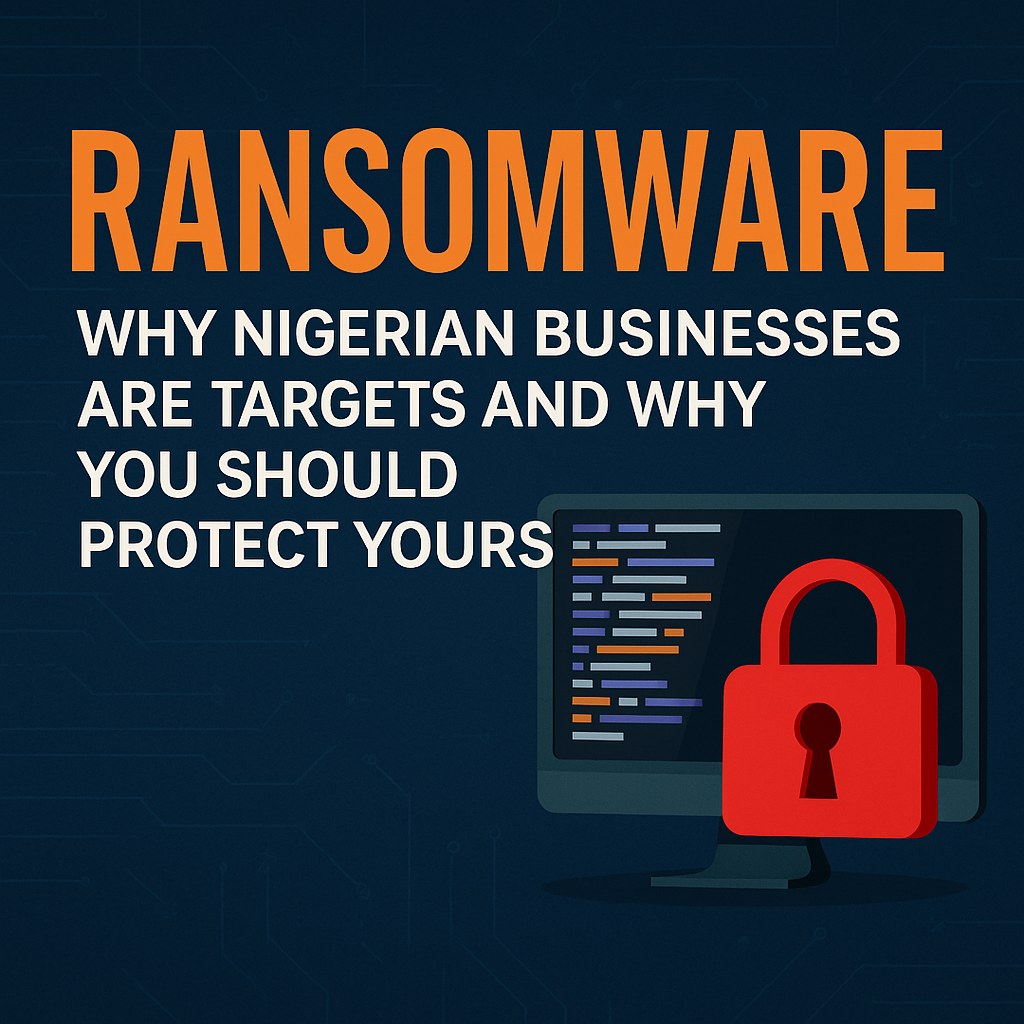
Why Nigerian Businesses Are Being Targeted
1. Low Cybersecurity Awareness
Small and medium-sized businesses (SMBs) in Nigeria still believe that cyberattacks only happen to big corporations. This false sense of security often leads to complacency, leaving small businesses underprepared. According to a 2023 report from Cybersecurity Ventures, 43% of cyberattacks target small businesses. Without adequate knowledge of cybersecurity threats, businesses unknowingly expose themselves to risk.
2. Outdated Systems and Weak Defenses
A staggering number of businesses in Nigeria continue to operate with outdated software and systems. This includes using unsupported versions of operating systems like Windows 7 or outdated anti-virus software. Hackers are well aware of these vulnerabilities, and outdated systems often lack patches for newly discovered security flaws. Additionally, the use of unsecured Wi-Fi networks or pirated software creates multiple entry points for cybercriminals to exploit.
3. Poor Data Backup Culture
Ransomware thrives when businesses lack a comprehensive data backup strategy. The majority of Nigerian businesses do not regularly back up critical data, and if they do, it’s often stored on-site or in unsecured locations. Without regular backups, if an attack occurs, the company may have no choice but to pay the ransom in hopes of retrieving its files. The absence of data backup is one of the most significant vulnerabilities that makes businesses easy targets for ransomware.
4. Rise of Digital Operations
As Nigerian businesses continue to digitalize, especially after the COVID-19 pandemic, many are exposed to new digital threats. From online payments to cloud storage, more touchpoints mean more ways for hackers to strike. Yet, many businesses have failed to invest in adequate cybersecurity solutions to protect their growing digital footprint. As a result, cybercriminals are exploiting these gaps in security.
How Ransomware Attacks Work
Ransomware attacks are surprisingly simple yet highly effective. Cybercriminals often use phishing tactics, sending malicious links or attachments via email, social media, or messaging apps like WhatsApp. Once an unsuspecting employee clicks on the link or downloads the attachment, the ransomware is silently installed. From there, it locks or encrypts vital files and displays a ransom note demanding payment, usually in cryptocurrency like Bitcoin to release the files.
In some cases, hackers threaten to release sensitive business data to the public or sell it on the dark web if the ransom is not paid. For Nigerian businesses, the risk of reputational damage or losing sensitive customer data is significant.
Real-Life Consequences for Nigerian Businesses
The fallout from a ransomware attack can be far-reaching:
1. Downtime:
When ransomware infects a business’s systems, everything comes to a halt. The downtime can last for hours or even days as businesses struggle to restore their files, communicate with customers, or get systems back online. This disruption is not only frustrating but can result in lost revenue and long-term damage to the company’s operations.
2. Loss of Trust:
Customers place a great deal of trust in businesses with their sensitive data. A ransomware attack can destroy that trust, leading to customer churn. For businesses that rely on consumer confidence, the damage to reputation can be catastrophic. Worse, some customers may turn to competitors who they feel can offer a safer, more reliable service.
3. Financial Damage:
Ransom demands can vary, but small businesses often face demands ranging from ₦500,000 to ₦2 million. Even though this might seem like a small amount, many businesses simply can’t afford to lose that kind of money, especially when there’s no guarantee of getting the files back. Additionally, businesses may face fines and costs related to the attack, including the expense of restoring data, paying for legal and consultancy services, and dealing with the legal implications of the breach.
4. Legal and Regulatory Issues:
Under Nigeria’s Data Protection Regulation (NDPR), businesses are required to safeguard sensitive customer data. A ransomware attack that leads to data loss could expose the company to legal consequences, including fines or litigation from affected customers. Moreover, a breach of customer data can lead to investigations by the Nigerian Communications Commission (NCC) or the National Information Technology Development Agency (NITDA).
How to Protect Your Business
While ransomware attacks are a growing concern, businesses can take practical steps to significantly reduce their risk. Here are essential measures to protect your business:
1. Regular Backups
Implementing a regular backup strategy is one of the simplest yet most effective ways to protect your business from ransomware. Backup your critical data at least once a week, and store backups both online (cloud storage) and offline (external hard drives or network storage). Always test your backups to ensure they work and that you can easily recover your data when needed.
2. Use Paid, Legal Software
Many businesses cut corners by using pirated software to save money, but this is a major security risk. Pirated software is often bundled with hidden malware that can open the door for ransomware attacks. Instead, invest in legitimate, paid software and regularly update it to patch known vulnerabilities. This simple step can go a long way in protecting your business.
3. Train Your Staff
Your employees are often the first line of defense against ransomware. Conduct regular cybersecurity training and encourage your team to be vigilant when handling emails and links. Phishing emails are one of the most common ways ransomware is introduced into a system, so educating your employees about how to spot suspicious messages and attachments is crucial.
4. Use Multi-Factor Authentication (MFA)
MFA is an essential security feature that adds an extra layer of protection to your business’s login processes. Even if a cybercriminal manages to steal your password, MFA requires them to provide a second form of authentication, making it harder for them to gain access to your sensitive systems.
5. Install Antivirus and Firewalls
Ensure that your business has reliable antivirus software and firewalls in place. These tools can detect and block malicious activity before it infiltrates your systems. Set the antivirus software to update automatically so that it remains effective against the latest threats.
Ransomware is not a distant problem; it’s already here, and Nigerian businesses are increasingly in the crosshairs of cybercriminals. The good news is that you don’t have to be a victim. By implementing basic cybersecurity practices such as backing up data, using legal software, training employees, and upgrading security systems, you can significantly reduce your risk of falling victim to a ransomware attack.
Start with awareness, then act. Protect your business, protect your customers, and safeguard the future of your operations. Cybercriminals are waiting for an opportunity. Don’t let your business be their next target.